A fulfilling old age is rarely determined by wealth alone.
Emotional fulfillment in later life often depends on:
- Strong relationships
- Emotional adaptability
- Purpose
- Community
- Gratitude
- Mental resilience
- Self-acceptance
- Meaningful memories
People who maintain curiosity, emotional openness, and social bonds often age more happily than those who isolate themselves emotionally.
This is why the illusion resonates so deeply. It transforms a simple visual choice into a symbolic reflection on the emotional direction of one’s life.
Can Personality Really Predict the Future?
One of the most important questions raised by tests like this is whether personality can truly predict future happiness.
The answer is complex.
Personality influences behavior, and behavior shapes life outcomes over time. For example:
- Highly trusting people may build stronger social networks.
- Extremely guarded people may struggle with emotional intimacy.
- Emotionally expressive individuals may seek support more easily.
- Independent personalities may become isolated if they avoid vulnerability.
In this sense, personality tendencies can influence the quality of relationships and emotional experiences across decades.
However, personality is not destiny.
People evolve continuously throughout life. Emotional awareness, therapy, reflection, experience, maturity, and personal growth can transform behavioral patterns dramatically.
A cautious person can learn emotional openness.
An overly dependent person can learn healthy boundaries.
A fearful individual can develop confidence.
A lonely person can rebuild connection.
The future is shaped not only by instincts but by conscious choices.
The Internet’s Growing Fascination With Psychological Content
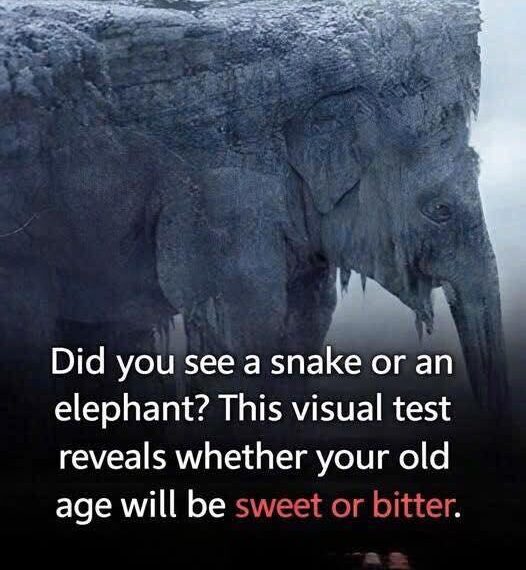
The snake-and-elephant illusion belongs to a much larger trend dominating online culture: psychological entertainment.
Modern audiences are increasingly drawn toward content involving:
- Emotional intelligence
- Personality analysis
- Mental health
- Behavioral psychology
- Cognitive science
- Self-discovery
- Relationship dynamics
- Human perception
This fascination reflects growing awareness of emotional well-being and personal development.
People no longer want only entertainment. They want experiences that feel psychologically meaningful and emotionally relevant.
Visual tests spread rapidly because they combine simplicity with emotional intrigue. A single image can generate massive engagement because viewers immediately want to compare answers with friends and family.
The illusion becomes a conversation starter about identity, emotions, and human nature.
What Your First Impression Says About Your Thinking Style
Beyond emotional symbolism, the illusion may also reflect different cognitive styles.
Snake-first individuals may demonstrate:
- Detail-focused observation
- Threat-sensitive processing
- Fast environmental scanning
- Logical prioritization
- High situational awareness
Elephant-first individuals may demonstrate:
- Holistic perception
- Emotional pattern recognition
- Big-picture thinking
- Symbolic interpretation
- Relational attention
Neither style is inherently better.
In fact, society benefits from both analytical thinkers and emotionally intuitive individuals. Successful relationships, workplaces, and communities often require balance between caution and compassion.
The illusion highlights these differences in a visually memorable way.
Emotional Defense Mechanisms and the Fear of Vulnerability
One of the most fascinating aspects of the snake interpretation is its connection to emotional defense.
Many highly observant individuals developed caution because vulnerability once felt unsafe. Over time, emotional protection becomes automatic.
They may:
- Avoid emotional dependency
- Keep feelings private
- Analyze others excessively
- Expect disappointment
- Fear betrayal
- Struggle to fully relax emotionally
These patterns are understandable, but long-term emotional walls can sometimes prevent intimacy and fulfillment.
The illusion’s “bitter old age” symbolism serves as a metaphorical warning against excessive emotional isolation.
Human beings are social creatures. Even the strongest personalities need connection, trust, affection, and emotional safety.
Why Emotional Intelligence Matters More With Age
As people grow older, emotional intelligence often becomes more important than status, appearance, or material success.
Emotional intelligence includes:
- Self-awareness
- Empathy
- Emotional regulation
- Communication
- Compassion
- Relationship management
Individuals who cultivate emotional intelligence throughout life often navigate aging more successfully because they adapt better to change and maintain stronger support systems.
This is one reason why the elephant symbolism appears associated with a sweeter old age. Emotional warmth tends to create lasting relational bonds.
However, emotional intelligence can be developed by anyone regardless of personality type.
The Role of Memory and Meaning in a Happy Life
The elephant interpretation emphasizes meaningful memories and emotional connection.
Psychologists frequently note that people approaching later stages of life often evaluate their happiness based on experiences rather than possessions.
What people remember most deeply are often:
- Moments of love
- Family experiences
- Friendships
- Emotional milestones
- Acts of kindness
- Shared laughter
- Personal growth
- Human connection
A meaningful life is rarely measured solely through productivity or material accumulation.
The emotional richness of memories strongly influences long-term fulfillment.
Why These Illusions Feel Surprisingly Accurate
Many people become shocked by how “accurate” illusion interpretations feel.
This happens partly because descriptions often rely on broad but relatable emotional patterns. Humans naturally search for personal meaning and recognize aspects of themselves in generalized statements.
However, these tests also resonate because they reflect genuine psychological truths about emotional styles, coping mechanisms, and personality tendencies.
Most people recognize themselves somewhere between the snake and elephant extremes.
Some are cautious yet loving.
Others are analytical but emotionally deep.
Many people shift between survival instincts and emotional openness depending on life circumstances.
The illusion becomes powerful because it simplifies complex human psychology into emotionally symbolic imagery.
The Hidden Lesson Behind the Snake and Elephant Illusion
Ultimately, the real value of this illusion is not predicting the future.
Its true power lies in encouraging self-reflection.
The image invites people to ask themselves important emotional questions:
- Do I trust people easily or struggle with vulnerability?
- Am I emotionally open or overly guarded?
- Do I prioritize connection or control?
- Am I building meaningful relationships?
- What kind of emotional future am I creating for myself?
These questions matter far more than whether someone technically saw a snake or elephant first.
A sweet old age is rarely accidental. It is often built gradually through emotional habits, relationships, empathy, resilience, and self-awareness.
Likewise, emotional bitterness often develops through unresolved pain, chronic isolation, fear, and emotional disconnection.
The future remains flexible.
Every relationship nurtured today shapes tomorrow’s emotional landscape.
Every act of vulnerability strengthens connection.
Every moment of self-awareness creates the possibility for growth.
Final Thoughts: What Did You Truly See?
The snake-and-elephant optical illusion may appear to be just another viral internet trend, but its emotional impact reveals something much deeper about human nature.
People are endlessly fascinated by hidden meanings because they are ultimately searching for understanding — understanding of themselves, their emotions, their fears, and their future.
Whether you first saw the snake or the elephant, the image reflects different aspects of human psychology that exist within all of us.
The snake reminds us of survival, caution, intelligence, and emotional protection.
The elephant reminds us of empathy, wisdom, emotional connection, and meaningful relationships.
Neither path is entirely right or wrong.
The healthiest life often comes from balance — the wisdom to protect yourself when necessary and the courage to remain emotionally open despite life’s disappointments.
In the end, your future is not determined by a frozen image hidden inside an icy mountain.
It is shaped by your choices, emotional habits, relationships, resilience, compassion, and willingness to grow throughout life.
Perhaps the most important question is not what you saw first.
Perhaps the real question is this:
What kind of emotional life are you creating today for the person you will become tomorrow?