At first glance, the challenge seems simple.
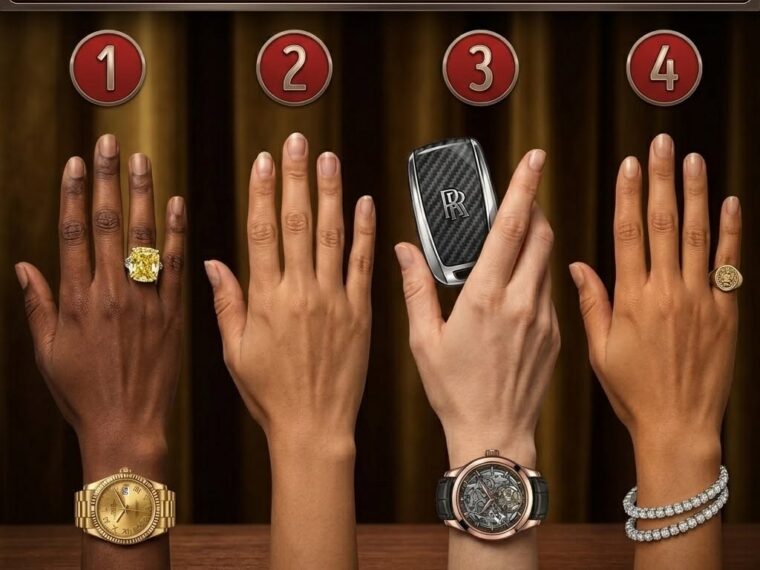
Four hands are presented. One is covered in expensive jewelry. Another grips the key to a luxury automobile. One wears a massive diamond ring that catches the light from every angle. Another appears almost disappointingly ordinary—no flashy accessories, no oversized watch, no obvious display of wealth.
The question is straightforward:
Which hand belongs to the billionaire?
Most people instinctively choose the hand covered in luxury symbols. After all, society has trained us to associate wealth with visible signs of success. Expensive watches. Designer clothing. Exotic cars. Massive houses. Rare jewelry. Exclusive memberships. These images dominate movies, advertisements, social media, and popular culture.
Yet the answer often surprises people.
The billionaire is frequently the person whose appearance reveals the least.
The hand that appears simple.
The hand without obvious luxury.
The hand that looks quietly maintained rather than aggressively displayed.
This revelation fascinates people because it challenges one of the strongest assumptions in modern society: the belief that wealth always looks wealthy.
But the reality is far more complex.
True wealth, especially generational or established wealth, often follows entirely different rules from the image of wealth sold to the public. The wealthiest individuals in the world frequently think differently about status, luxury, spending, appearance, privacy, and social recognition. What seems ordinary from the outside may conceal extraordinary financial power.
Understanding this phenomenon requires exploring psychology, social behavior, human perception, status signaling, luxury consumption, and the fascinating difference between appearing rich and actually being rich.
The distinction is far greater than most people realize.
Why Humans Are Fascinated by Wealth
Money has always carried symbolic power.
Beyond its practical purpose, wealth represents:
- security
- freedom
- influence
- opportunity
- status
- success
- independence
Because of this, people constantly search for visible clues that reveal who possesses financial power.
Humans naturally evaluate:
- clothing
- watches
- vehicles
- homes
- speech patterns
- grooming
- posture
- accessories
Within seconds of meeting someone, the brain begins making assumptions about their socioeconomic position.
The problem is that these assumptions are often wrong.
Extremely wrong.
The Psychology of First Impressions
The human brain is designed to make rapid judgments.
This ability once helped our ancestors determine:
- friend or enemy
- safe or dangerous
- trustworthy or suspicious
Today, those same mental shortcuts influence perceptions of wealth.
People see:
- a luxury watch
- designer labels
- expensive jewelry
And automatically conclude:
“This person must be wealthy.”
Yet financial reality often tells a very different story.
Someone may own luxury accessories while carrying:
- significant debt
- financial stress
- minimal savings
- poor investment habits
Meanwhile, another person wearing simple clothing may possess millions—or even billions—in assets.
The brain confuses appearance with reality because appearance is easier to process.
The Difference Between Looking Rich and Being Rich
This distinction sits at the heart of the billionaire puzzle.
Looking rich and being rich are not the same thing.
Looking rich focuses on visible consumption.
Being rich focuses on ownership.
One person spends money displaying status.
The other accumulates assets generating wealth.
This difference may seem subtle, but it changes everything.
Consider two individuals.
Person A:
- luxury vehicle
- designer wardrobe
- expensive jewelry
- high monthly payments
Person B:
- modest vehicle
- simple clothing
- diversified investments
- substantial assets
From a distance, Person A appears wealthier.
Financially, Person B may be dramatically richer.
The illusion is powerful because society often rewards appearances more visibly than financial discipline.
Why True Wealth Often Becomes Invisible
One of the most fascinating aspects of wealth psychology is that financial behavior changes as wealth increases.
People struggling financially often dream about displaying success.
But individuals who have already achieved extraordinary wealth frequently become less interested in proving it.
Why?
Because their relationship with money changes.
Money stops being about impressing others and becomes about:
- freedom
- time
- privacy
- control
- security
- opportunity
The need for external validation often decreases.
This phenomenon creates what many describe as “quiet wealth.”
The Rise of Quiet Luxury
In recent years, a growing fascination has emerged around the concept of quiet luxury.
Quiet luxury emphasizes:
- quality over logos
- craftsmanship over branding
- discretion over attention
- longevity over trends
The philosophy rejects obvious status symbols in favor of subtle excellence.
Someone embracing quiet luxury might wear:
- perfectly tailored clothing
- premium fabrics
- understated accessories
- timeless designs
The average observer may not recognize the cost.
And that is often the point.
True luxury increasingly values exclusivity through knowledge rather than visibility.
Why Billionaires Often Avoid Flashy Displays
There are practical reasons wealthy individuals may avoid excessive displays of wealth.
Privacy
Public displays attract attention.
Attention attracts:
- scrutiny
- requests
- criticism
- security concerns
Many wealthy individuals prioritize privacy above prestige.
The fewer people who know about their wealth, the fewer complications arise.
Security Considerations
Visible wealth can increase personal risk.
Luxury items may attract:
- theft
- fraud
- scams
- unwanted attention
As wealth grows, protecting assets becomes increasingly important.
Many affluent individuals deliberately minimize visible signals for this reason.
Confidence Changes Status Behavior
People often display status when seeking validation.
Those who already feel secure may have little need for external approval.
This creates a fascinating paradox:
The more secure someone becomes, the less they may feel compelled to advertise success.
Confidence becomes quieter.
The Hidden Language of Grooming
Returning to the billionaire hand puzzle, the detail that often distinguishes the wealthy individual is not jewelry.
It is grooming.
Why?
Because grooming reflects habits rather than purchases.
Anyone can buy:
- a luxury watch
- a designer bag
- expensive accessories
But consistent self-care often reveals something deeper:
- discipline
- attention to detail
- lifestyle habits
- resource availability
Pristine nails.
Healthy skin.
Subtle maintenance.
These signals communicate stability rather than performance.
Wealth and Time: The Ultimate Luxury
One of the biggest misconceptions about wealth is that money itself is the ultimate goal.
For many affluent individuals, time becomes more valuable than money.
Money can be earned repeatedly.
Time cannot.
As wealth grows, priorities often shift toward:
- convenience
- efficiency
- wellness
- health
- personal freedom
This explains why many wealthy people invest heavily in:
- healthcare
- preventive wellness
- personal development
- fitness
- stress reduction
The appearance of excellent grooming often reflects this investment in long-term wellbeing.
Why Flashiness Can Sometimes Signal the Opposite of Wealth
This idea surprises many people.
Excessive status displays occasionally indicate financial insecurity rather than abundance.
Why?
Because individuals often use luxury consumption to communicate success they feel internally uncertain about.
Psychologists call this status signaling.
The goal becomes:
- admiration
- recognition
- envy
- validation
The purchase serves an emotional purpose beyond utility.
This does not mean luxury purchases are inherently bad.
It simply means motivation matters.
The Emotional Side of Luxury Consumption
Click page 2 to continue