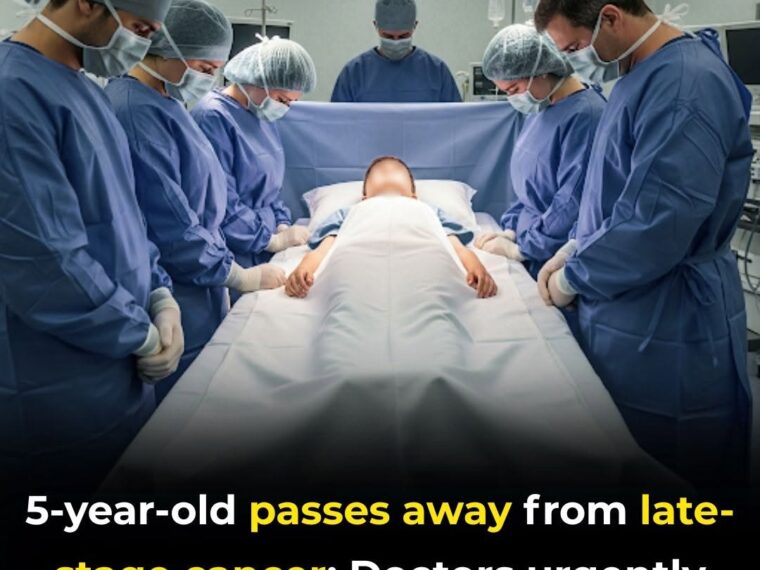
Few headlines are more emotionally powerful than those involving children and serious illness.
When a headline claims that a young child has died from cancer and that doctors are urgently warning parents to stop giving children certain foods, it immediately triggers fear, guilt, anxiety, and confusion. Parents naturally want to protect their children. They want answers. They want to know if something in their home, kitchen, or daily routine could somehow put their child at risk.
That emotional vulnerability is exactly why such headlines spread so quickly.
The idea is frightening because it suggests something every parent dreads: that an ordinary food item might secretly cause a devastating disease.
But there is a problem.
The reality of childhood cancer is far more complex—and far less sensational—than many viral stories suggest.
Modern medical science does not support the claim that a handful of specific foods directly cause childhood cancer. Pediatric oncologists, cancer researchers, genetic specialists, and healthcare professionals consistently emphasize that childhood cancers differ significantly from adult cancers. Most childhood cancers develop because of complex biological processes that often begin very early in life, sometimes even before birth.
This distinction matters enormously.
When misinformation spreads, it creates unnecessary fear and can make grieving families feel responsible for something that was never their fault. It can also distract attention away from genuine health guidance that helps children grow, develop, and thrive.
At the same time, nutrition remains incredibly important for children’s health. While certain foods are not responsible for causing childhood cancer, some dietary habits can influence long-term health outcomes, including obesity, cardiovascular disease, diabetes, inflammation, and certain adult cancers later in life.
Understanding the difference between legitimate nutritional advice and fear-based misinformation is one of the most important skills modern parents can develop.
The truth is not as dramatic as the headlines.
But it is far more useful.
Why Headlines About Children’s Health Spread So Quickly
Human beings are emotionally wired to protect children.
Stories involving children immediately capture attention because they activate powerful emotions:
- empathy
- concern
- fear
- protectiveness
- responsibility
When a headline combines:
- a child
- a serious illness
- a common food
It creates an irresistible psychological reaction.
People immediately ask:
“Could this happen to my child?”
That emotional response often happens before critical thinking begins.
The Problem With Fear-Based Health Information
Fear can be useful when it alerts people to genuine danger.
However, fear becomes harmful when it replaces evidence.
Sensational health claims often:
- exaggerate risks
- oversimplify complex diseases
- create guilt
- spread misinformation
- encourage unnecessary dietary restrictions
This can be especially damaging for parents who are already trying their best to make healthy choices.
Understanding Childhood Cancer
One of the most important facts many people do not realize is that childhood cancers are fundamentally different from many adult cancers.
Adult cancers often develop after decades of exposure to:
- smoking
- alcohol
- environmental toxins
- chronic inflammation
- obesity
- lifestyle factors
Childhood cancers generally follow different biological pathways.
Why Childhood Cancer Is Different
Children have had far less time to accumulate environmental exposures.
As a result, many childhood cancers are linked to:
- genetic mutations
- developmental abnormalities
- cellular changes occurring very early in life
These changes often happen long before symptoms appear.
In many cases, there is nothing a parent could have done differently to prevent the disease.
This is an important reality that deserves emphasis.
The Emotional Burden Parents Already Carry
When a child becomes seriously ill, parents often experience overwhelming guilt.
They ask themselves questions like:
- Did I miss a symptom?
- Did I do something wrong?
- Could I have prevented this?
- Was it something they ate?
- Was it something in our environment?
These questions are natural.
But blaming parents without evidence is both unfair and scientifically inaccurate.
Most childhood cancers are not caused by parenting mistakes.
The Difference Between Cause and Risk
Many people misunderstand how medical risk works.
A cause directly creates a disease.
A risk factor increases the likelihood of disease occurring.
These are not the same thing.
For example:
Smoking increases lung cancer risk significantly.
Yet not every smoker develops lung cancer.
Likewise, many people who develop lung cancer never smoked.
Health outcomes are often influenced by multiple interacting factors.
Can Food Cause Childhood Cancer?
Current scientific understanding does not support the idea that common foods directly cause childhood cancer.
This is a crucial distinction.
No pediatric oncologist would tell parents:
“Your child’s cancer was caused by a hot dog.”
Disease development is far more complex than that.
However, doctors do encourage healthy eating because nutrition affects many aspects of long-term health.
Why Nutrition Still Matters
Rejecting misinformation does not mean nutrition is unimportant.
Healthy eating influences:
- immune function
- growth
- brain development
- energy levels
- metabolic health
- cardiovascular health
Good nutrition helps children thrive.
The key is understanding realistic benefits rather than exaggerated claims.
Food Category 1: Processed Meats
Processed meats often appear in health discussions.
Examples include:
- hot dogs
- sausages
- deli meats
- bacon
- cured meats
These foods undergo preservation processes that may involve:
- smoking
- curing
- added preservatives
Why Processed Meats Raise Concerns
Research has linked high consumption of processed meats to increased risk of certain adult cancers, particularly colorectal cancer.
However, this does not mean:
- a single hot dog causes cancer
- occasional consumption is dangerous
- children who eat processed meats will develop cancer
Context matters.
Frequency matters.
Overall dietary patterns matter.
Moderation Instead of Fear
Healthy nutrition rarely requires absolute elimination.
For most families, occasional processed meat consumption can fit into an overall balanced diet.
The goal is moderation rather than panic.
Food Category 2: Sugary Drinks
Sugary beverages have become one of the largest sources of added sugar in many diets.
Examples include:
- soda
- sweetened teas
- flavored drinks
- sugar-heavy juice beverages
The Real Concern With Sugar
Sugar itself does not directly cause childhood cancer.
However, excessive sugar intake contributes to:
- obesity
- insulin resistance
- metabolic dysfunction
- dental problems
Long-term obesity is associated with increased risk of various chronic diseases later in life.
Why Water Remains the Best Choice
For most children, water remains the ideal daily beverage.
Water supports:
- hydration
- concentration
- physical performance
- overall health
Simple habits often produce powerful long-term benefits.
Food Category 3: Artificial Food Dyes
Artificial colors frequently generate controversy.
Parents often encounter claims that food dyes cause everything from hyperactivity to cancer.
The reality is more nuanced.
What Research Actually Suggests
Some children appear sensitive to certain food dyes.
Potential concerns may include:
- behavioral changes
- increased hyperactivity
- attention difficulties
However, evidence does not support claims that common food dyes directly cause childhood cancer.
Why Whole Foods Offer Advantages
Minimally processed foods often provide:
- fiber
- vitamins
- minerals
- antioxidants
These nutrients support overall development and wellbeing.
The benefit comes from nutrient density—not fear of individual ingredients.
Food Category 4: Burnt and Charred Foods
Cooking methods influence food chemistry.
When foods become heavily charred, certain compounds may form.
These include:
- heterocyclic amines
- polycyclic aromatic hydrocarbons
These compounds have attracted scientific interest because of potential health implications.
Understanding the Real Risk
The important word is “potential.”
Most concerns involve:
- frequent exposure
- large amounts
- long-term consumption
Occasional grilled foods are not a reason for alarm.
The issue becomes relevant primarily when heavily charred foods are consumed regularly over long periods.
Better Cooking Practices
Simple adjustments can reduce exposure:
- avoid excessive charring
- cook at moderate temperatures
- remove burnt portions
- vary cooking methods
Balance remains the central principle.
Food Category 5: Highly Processed Snack Foods
Modern snack foods often contain:
- refined carbohydrates
- added sugars
- excess sodium
- unhealthy fats
Examples include:
- chips
- candy
- cookies
- packaged snack cakes
Why Nutrition Experts Encourage Moderation
The concern is not that these foods directly cause childhood cancer.
The concern is opportunity cost.
When diets become dominated by highly processed snacks, children may consume fewer:
- fruits
- vegetables
- whole grains
- lean proteins
- nutrient-rich foods
Nutrition is about what children eat—not only what they avoid.
The Importance of Nutrient Density
Click page 2 to continue