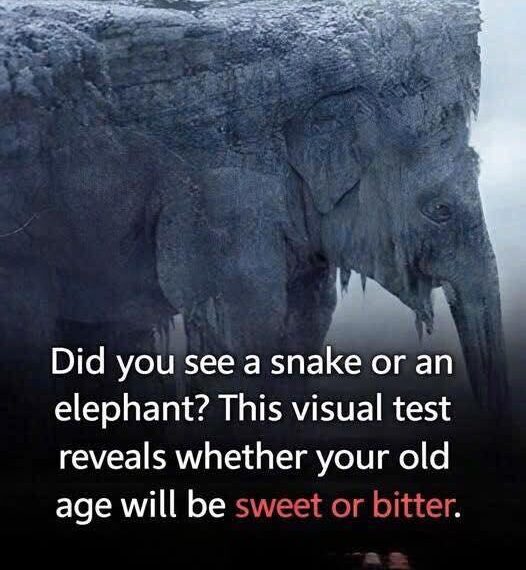
In a world obsessed with personality tests, psychological mysteries, and visual puzzles, few things capture human curiosity quite like an optical illusion. A single image can divide millions of viewers into completely different experiences, making people question not only what they see, but who they are deep inside. Recently, one particular illusion has spread rapidly across social media platforms and online discussions, creating fascination, debate, and emotional reactions among viewers worldwide.
The image appears simple at first glance: a frozen landscape covered in snow and ice, surrounded by dark trees and rugged mountain textures. Yet hidden within the icy formation are two possible figures. Some people immediately notice a snake sliding along the rocky edge, while others instantly recognize the shape of an elephant emerging from the frozen wall.
What makes this illusion especially captivating is the dramatic interpretation attached to it. According to the viral claim, what you notice first may reveal whether your old age will be emotionally sweet and fulfilling or distant and bitter. While the test is not scientifically proven, its emotional symbolism resonates deeply with many people because it touches one of humanity’s oldest fears and desires: the future.
Will we grow old surrounded by love, peace, and meaningful memories? Or will we become isolated, guarded, and emotionally disconnected from others?
This fascinating visual puzzle opens the door to much larger conversations about psychology, perception, emotional intelligence, aging, relationships, and the hidden mechanisms of the human mind. Whether you saw the snake or the elephant first, your answer may reveal far more than you expect about your instincts, personality traits, emotional patterns, and life philosophy.
Why Optical Illusions Fascinate the Human Brain
Before exploring the meaning behind the snake and elephant interpretations, it is important to understand why optical illusions have such a powerful effect on people.
Human vision is not simply about seeing objects exactly as they are. The brain constantly interprets, predicts, filters, and reconstructs visual information. Every second, your mind processes enormous amounts of sensory data, selecting certain patterns while ignoring others. What you notice first often depends on your emotions, experiences, fears, expectations, and subconscious attention.
This is why two people can look at the exact same image and perceive entirely different things.
Optical illusions create a psychological conflict between what the eyes observe and what the brain decides to prioritize. This tension stimulates curiosity and emotional engagement. The viewer feels compelled to analyze the image repeatedly, searching for hidden meanings and deeper truths.
In many ways, these illusions act like mirrors. They do not objectively predict the future, but they reflect certain tendencies in how individuals process the world around them.
For centuries, psychologists, neuroscientists, and behavioral researchers have studied visual perception because it reveals important clues about personality, emotional sensitivity, stress responses, cognitive flexibility, and subconscious priorities.
The snake-and-elephant illusion taps directly into this fascination because both animals carry strong symbolic meanings deeply rooted in human culture and psychology.
The Symbolism of the Snake Throughout Human History
If you saw the snake first, you are not alone. According to the viral interpretation, the overwhelming majority of viewers immediately recognize the serpent before seeing anything else.
But why?
The answer lies partly in human evolution.
For thousands of years, snakes represented both danger and survival. Early humans who quickly detected snakes had a better chance of staying alive. Because of this, the human brain developed heightened sensitivity toward snake-like shapes and movements. Even today, people often notice serpentine forms faster than other visual elements.
However, the symbolism of the snake extends far beyond fear.
Across civilizations, snakes have represented:
- Intelligence
- Transformation
- Survival
- Protection
- Healing
- Rebirth
- Caution
- Hidden wisdom
- Power
- Emotional defense
In ancient cultures, snakes were associated with mystical knowledge and deep intuition. Their ability to shed their skin symbolized renewal and adaptation. At the same time, their unpredictable nature made them symbols of caution and alertness.
Seeing the snake first may therefore indicate a personality wired toward vigilance and observation.
If You Saw the Snake First: The Mind of the Observer
People who immediately notice the snake are often described as highly analytical individuals. They tend to process details quickly and instinctively search for patterns, risks, and hidden meanings in their environment.
These individuals usually possess sharp awareness and strong instincts. They rarely trust blindly and often analyze situations carefully before emotionally investing in people or opportunities.
In many cases, they are:
- Independent thinkers
- Emotionally guarded
- Strategic decision-makers
- Highly perceptive
- Mentally resilient
- Cautious around betrayal
- Protective of their personal space
- Sensitive to subtle changes in behavior
Rather than moving through life impulsively, they prefer control and preparation. Their minds constantly scan for potential problems before others even notice them.
This personality type often develops because of past experiences. People who have experienced emotional disappointment, instability, criticism, or unpredictability sometimes become highly observant adults. Their alertness becomes both a survival tool and a psychological shield.
They are not necessarily cold people. In fact, many snake-first personalities feel emotions intensely. However, they tend to hide vulnerability behind composure and logic.
Why the Snake Personality May Experience a “Bitter” Old Age
The viral interpretation suggests that people who see the snake first may face a more emotionally difficult old age. This does not mean they are destined for unhappiness. Instead, the symbolism points toward certain emotional risks associated with excessive self-protection.
Highly guarded individuals sometimes struggle to maintain deep emotional intimacy over long periods. Their instinct to anticipate betrayal or disappointment can unintentionally create emotional distance between themselves and others.
Over time, this may lead to:
- Loneliness
- Difficulty trusting others
- Emotional isolation
- Fear of dependency
- Reduced vulnerability
- Relationship fatigue
- Excessive self-reliance
Many analytical personalities prioritize stability, security, and control so strongly that they neglect emotional openness. They become excellent at surviving but less comfortable at emotionally surrendering to connection.
As people age, emotional warmth often becomes more valuable than achievement or control. Those who remain emotionally guarded throughout life may discover that protection comes at a cost.
However, this interpretation should not be viewed as fate. Awareness changes outcomes. People with snake-like personalities who consciously nurture emotional relationships, communication, empathy, and vulnerability often build incredibly meaningful lives later in life.
Their strength lies in resilience. Once they learn balance between caution and openness, they can enjoy both security and emotional fulfillment.
The Symbolism of the Elephant in Human Psychology
If you saw the elephant first, your interpretation follows a much rarer path according to the illusion’s viral narrative. The elephant symbolizes an entirely different psychological orientation.
Throughout history, elephants have represented:
- Wisdom
- Emotional depth
- Loyalty
- Family bonds
- Stability
- Compassion
- Patience
- Memory
- Strength through gentleness
Unlike the snake, which is associated with alert survival instincts, the elephant symbolizes emotional grounding and social connection.
Elephants are famous for their powerful social structures and emotional intelligence. They care for injured members of their group, protect their young, and display behaviors resembling grief, empathy, and affection.
Because of this symbolism, seeing the elephant first may reflect a personality that prioritizes relationships, emotional meaning, and human connection over defensive caution.
If You Saw the Elephant First: The Emotional Builder
People who immediately recognize the elephant are often emotionally intuitive individuals who naturally focus on connection rather than threat detection.
These individuals tend to:
- Value loyalty deeply
- Build strong emotional bonds
- Prioritize family and friendship
- Seek emotional harmony
- Offer support to others
- Display empathy naturally
- Focus on long-term meaning
- Appreciate emotional memories
Unlike analytical personalities who carefully evaluate emotional risk, elephant-first individuals often lead with emotional understanding.
They tend to remember emotional experiences vividly and often define life through relationships rather than achievements alone.
This does not mean they are weak or naive. In fact, emotionally intelligent people often possess extraordinary resilience because they draw strength from connection and community.
They may also be more spiritually reflective, compassionate, and emotionally expressive than the average person.
Why the Elephant Personality May Experience a “Sweet” Old Age
The illusion suggests that people who see the elephant first are more likely to enjoy a fulfilling and emotionally rich old age.
Again, this interpretation is symbolic rather than predictive. However, it highlights an important truth about aging and human happiness.
Research consistently shows that emotional relationships strongly influence long-term well-being. People who maintain meaningful social bonds often experience:
- Better emotional health
- Reduced loneliness
- Greater life satisfaction
- Lower stress levels
- Stronger mental resilience
- More emotional support during aging
Individuals who prioritize connection throughout life often accumulate emotional wealth rather than merely material success.
As they age, they may find themselves surrounded by people who genuinely care for them because they invested emotionally in others over many years.
Their memories become sources of comfort rather than regret.
However, elephant personalities also face challenges. Their emotional openness can sometimes make them vulnerable to disappointment, emotional exhaustion, or over-giving. Some compassionate individuals spend so much energy caring for others that they neglect themselves.
Balance remains essential for every personality type.
The Deep Connection Between Perception and Personality
Although these viral illusion tests are not scientific personality diagnostics, they resonate because perception genuinely connects to psychology in fascinating ways.
What we notice first often reflects:
- Emotional focus
- Stress patterns
- Attention habits
- Survival instincts
- Personality orientation
- Subconscious priorities
A person constantly exposed to stress or unpredictability may become hyper-alert to danger signals. Another person raised in emotionally supportive environments may naturally prioritize social or emotional cues instead.
This is why perception is deeply personal.
The brain is not a camera. It is an interpreter shaped by experiences, memories, fears, and desires.
Even temporary emotional states can influence what people notice first. Someone feeling anxious may detect threatening shapes more quickly, while someone emotionally relaxed may perceive softer or more comforting forms first.
The illusion becomes psychologically engaging because it creates the feeling that the image somehow “understands” us.
Why People Love Personality Tests and Visual Challenges
The internet’s obsession with personality quizzes and optical illusions reflects a deeper human need for identity and understanding.
People constantly seek answers to questions such as:
- Who am I really?
- Why do I react this way?
- What kind of future will I have?
- How do others perceive me?
- What are my hidden strengths?
- What emotional patterns shape my life?
Visual personality tests feel exciting because they promise quick insight without requiring long psychological evaluations.
In today’s fast-moving digital world, people crave emotionally engaging experiences that feel personal and meaningful.
Optical illusions combine entertainment with emotional reflection. Even when viewers know the interpretations are not scientifically guaranteed, they still enjoy comparing results and analyzing themselves.
The emotional power comes from recognition. When people read descriptions that resonate with their experiences, they feel seen and understood.
The Psychology of Aging and Emotional Fulfillment
The illusion’s dramatic question about whether old age will become “sweet or bitter” touches a universal human concern.
Most people do not fear aging itself as much as they fear emotional emptiness, regret, loneliness, or disconnection later in life.
Click page 2 to continue