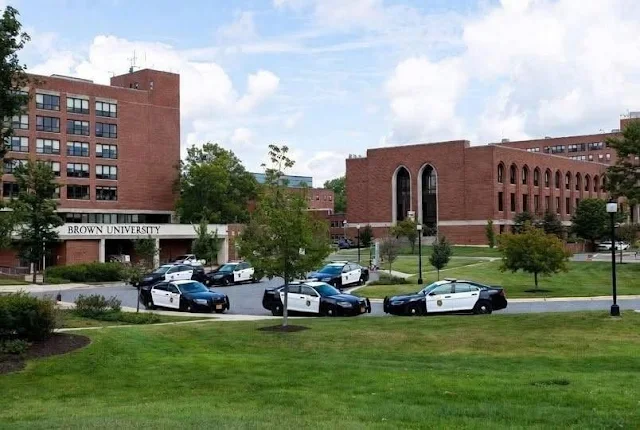
There are certain moments that split life into two parts: the world before the tragedy, and the world after it.
A normal morning begins quietly. Parents rush to pack lunches. Children complain about homework. Teachers unlock classroom doors while sipping coffee that has already gone cold. School buses arrive with sleepy students staring out of fogged windows, thinking about lunch breaks, sports practice, math tests, or weekend plans.
Everything feels ordinary.
And then suddenly, nothing is ordinary anymore.
A phone rings.
A message appears on a screen.
A rumor spreads through frightened whispers.
Parents freeze in panic. Teachers lock doors with trembling hands. Students search each other’s faces for answers no one has yet. Entire communities stop breathing at once, suspended between fear and uncertainty.
When tragedy strikes a school, the damage extends far beyond the headlines. The emotional shock moves outward like waves after a stone crashes into still water. It touches children, parents, teachers, emergency workers, siblings, grandparents, neighbors, and even strangers watching from far away.
The world often focuses on the breaking news alerts, the investigations, the debates, and the statistics. But hidden beneath all of that noise are deeply human moments that rarely make headlines:
A child asking quietly, “Am I safe at school?”
A parent sitting awake all night just to watch their child sleep.
A teacher replaying every second in their mind, wondering if they could have done more.
A teenager pretending to be fine while silently falling apart inside.
A community gathering under candlelight, searching desperately for words that do not exist.
These tragedies leave emotional wounds that do not disappear when television cameras leave town. Healing is not immediate. Grief is not linear. Fear does not follow schedules.
And perhaps the hardest part of all is this: adults are expected to guide children through unimaginable pain while struggling to process it themselves.
So how do families talk to children after terrifying events? How do communities begin rebuilding emotional safety? How do people continue living in a world that suddenly feels fragile?
The answers are not simple. But compassion, honesty, patience, and emotional connection can become powerful starting points.
The Silent Emotional Earthquake That Follows a School Tragedy
When a traumatic event affects a school, the emotional impact spreads much farther than many people realize.
Children who were nowhere near the event may still feel terrified. Parents who live in completely different cities may suddenly fear sending their kids to school. Teachers may experience anxiety walking into classrooms that once felt safe and ordinary.
This happens because schools represent something sacred in human society.
Schools are supposed to symbolize:
- Safety
- Growth
- Friendship
- Curiosity
- Innocence
- Routine
- Hope for the future
When violence or tragedy enters that space, it disrupts something psychologically profound. It challenges the basic assumption that children are protected.
Even adults who try to remain calm often experience intense emotional reactions:
- Fear
- Anger
- Helplessness
- Anxiety
- Guilt
- Grief
- Emotional exhaustion
Children notice these emotional shifts immediately.
Young people are highly sensitive to adult energy. Even when adults attempt to hide fear, children often sense tension through facial expressions, tone of voice, routines, and emotional atmosphere.
This is why communication after tragedy matters so deeply.
Silence can sometimes feel more frightening than truth.
Why Children Need Adults to Help Interpret Fear
Children do not process traumatic information the same way adults do.
Adults generally have life experience, emotional context, and coping mechanisms that help them understand crisis. Children, however, are still learning how the world works. Their brains are developing rapidly, and they often rely on trusted adults to help interpret frightening situations.
When something tragic happens, children immediately begin searching for cues:
- Is the world still safe?
- Are the adults scared?
- Could this happen to me?
- Will my family protect me?
- What happens next?
Without guidance, children may fill gaps in understanding with imagination and fear.
This is especially true today because children are exposed to constant information through:
- Social media
- Television
- Conversations at school
- Online videos
- Friends’ discussions
- News alerts
Even very young children can absorb emotional tension without fully understanding the facts.
That uncertainty can become psychologically overwhelming.
The Importance of Age-Appropriate Conversations
One of the biggest mistakes adults make after tragedy is assuming children either:
- Need complete details immediately
or - Should be shielded from all discussion entirely
Neither extreme works well.
Children need information delivered in ways appropriate for their emotional and developmental stage.
The goal is not to overwhelm them with terrifying details. The goal is to provide emotional safety, clarity, and reassurance.
Helping Young Children Feel Safe Again
Young children under seven years old experience the world very concretely.
They may not fully understand death, violence, or large-scale tragedy, but they strongly absorb emotional energy and disruption.
At this age, children mainly need reassurance.
Simple explanations work best:
“Something very sad happened at a school.”
“Adults are working hard to keep children safe.”
“You are loved, and I am here with you.”
Young children often ask repetitive questions after scary events. This repetition is not manipulation or disobedience. It is their brain trying to process uncertainty.
Parents may need to repeat comforting information many times:
- “You are safe.”
- “Your school has adults who protect children.”
- “I will always do my best to take care of you.”
Routine also becomes incredibly important.
Regular schedules help children feel emotionally grounded:
- Bedtimes
- Meals
- School routines
- Storytime
- Family rituals
Predictability restores a sense of safety after chaos.
Why Older Children Need Honest Dialogue
School-age children between eight and twelve often understand more than adults realize.
They hear conversations. They see headlines. They talk to classmates. Many already know frightening details before adults begin discussions.
At this age, avoiding conversation entirely can increase anxiety.
Instead, adults should invite questions gently:
“What have you heard?”
“How are you feeling about this?”
“Is there anything that scared or confused you?”
This approach matters because children sometimes develop inaccurate fears or misinformation through rumors and online discussions.
Adults can calmly correct misunderstandings while validating emotions.
Children need permission to feel:
- Sad
- Scared
- Angry
- Confused
- Worried
A powerful sentence many children need to hear is:
“It makes sense to feel upset after hearing something so sad.”
Validation helps children understand that emotions are not dangerous or shameful.
Teenagers Often Hide Their Fear
Teenagers process tragedy differently from younger children.
Many teens appear detached, sarcastic, or emotionally numb even while experiencing deep distress internally. Adolescents often fear appearing vulnerable or dramatic, especially around peers.
At the same time, teenagers today face enormous exposure to disturbing content online. Graphic discussions, conspiracy theories, emotional arguments, and nonstop media coverage can intensify stress significantly.
Teens benefit most from open dialogue rather than lectures.
Questions matter more than speeches:
“What are people saying at school?”
“How are your friends reacting?”
“What do you think about everything happening?”
Teenagers want honesty and emotional respect.
They also need adults willing to admit uncertainty:
“I don’t have all the answers.”
“This is painful and complicated.”
“I’m struggling emotionally too.”
Paradoxically, seeing adults acknowledge emotions calmly can make teens feel safer.
The Emotional Burden Teachers Carry
While much attention focuses on students and parents, teachers often carry enormous emotional trauma after school tragedies.
Teachers are expected to:
- Protect students
- Stay calm during chaos
- Comfort frightened children
- Continue teaching afterward
- Support grieving families
- Manage their own emotional reactions silently
Many educators experience:
- Survivor’s guilt
- Anxiety
- Sleep disturbances
- Emotional burnout
- Hypervigilance
- Secondary trauma
And yet, teachers are often pressured to “return to normal” quickly.
But trauma does not disappear because schedules resume.
Teachers need emotional support too:
- Counseling access
- Community appreciation
- Mental health resources
- Rest
- Space to process grief
The emotional well-being of educators directly affects students’ recovery.
First Responders Carry Invisible Scars
Police officers, firefighters, paramedics, dispatchers, and emergency medical teams also endure immense emotional weight during school crises.
These individuals witness scenes most people cannot imagine.
Even highly trained professionals are not emotionally invincible.
Click page 2 to continue